
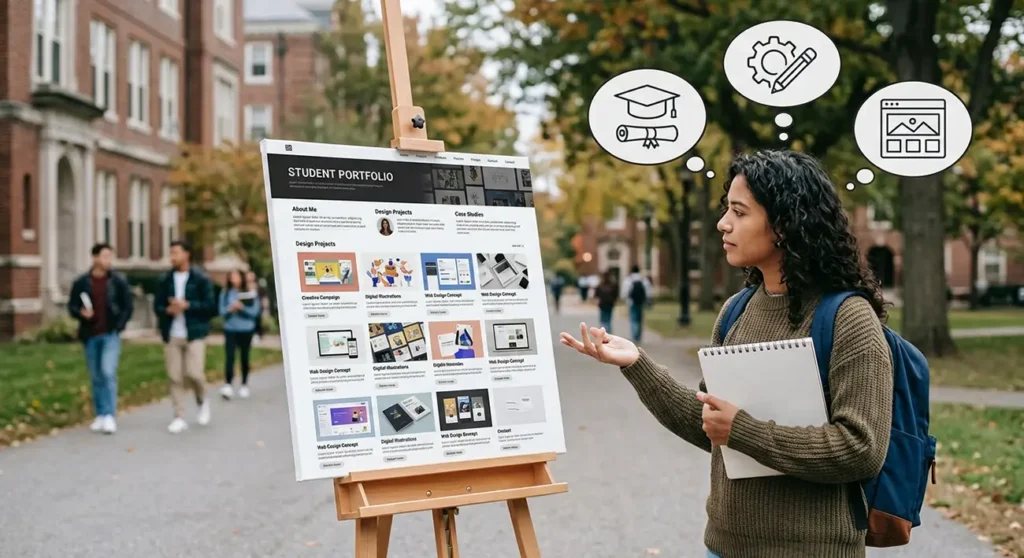
Key Takeaways
- Yes, students benefit from having a portfolio website before graduation, since recruiters and hiring managers routinely look for one when a resume feels generic.
- A portfolio does not require a computer science background; builders like Portfoliomo handle the technical side.
- The best time to start is at least one full semester before internship or job applications begin, not the week before graduation.
- Quality of projects shown matters more than quantity; three strong examples outperform ten rushed ones.
- A portfolio website works for job seekers, freelancers, and career changers alike, not just design or tech students.
Should students have a portfolio website before graduating? In most fields today, the honest answer is yes, and the reason has less to do with trends and more to do with how recruiters and hiring managers actually screen candidates. A resume lists what someone claims to have done. A portfolio shows it.
Yes, Students Should Build a Portfolio Website Before Graduating – Here Is Why
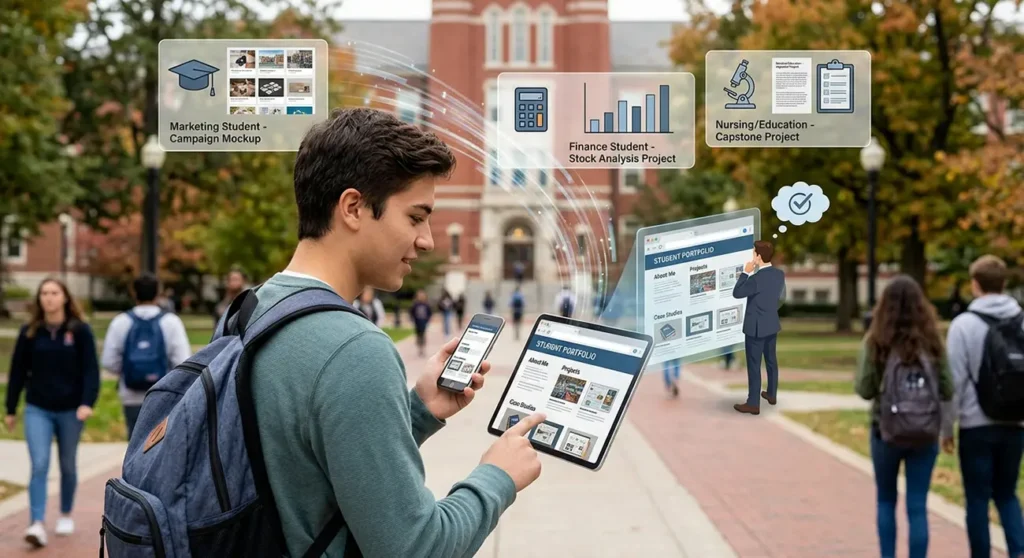
Hiring managers sort through dozens, sometimes hundreds, of nearly identical resumes for a single internship or entry-level role. Two candidates with the same GPA and similar coursework are easy to mix up on paper. A portfolio website breaks that tie immediately, because it gives a hiring manager something concrete to click on instead of a bullet point to take on faith.
This matters even outside creative and technical fields. A marketing student can show a real campaign mockup. A finance student can walk through a stock analysis project. A nursing or education student can showcase a capstone project, a lesson plan, or a community health initiative. The format adapts; the value does not change.
Consider a college senior applying for a UX internship against forty other applicants. The resume alone rarely closes that gap. A portfolio website with three case studies, each explaining a problem, the process, and the outcome, gives that student a five-minute story a recruiter can review before the first interview even happens.
What Employers and Clients Actually Look for in a Student Portfolio
Recruiters do not expect a student portfolio to look like the work of a ten-year veteran, and pretending otherwise usually backfires. What they do look for is judgment: can this person explain a decision, learn from a mistake, and communicate clearly about their own work.
Method 1: Lead With Projects, Not a Resume Summary
A portfolio homepage that repeats the resume word for word wastes the one advantage a website has over paper: the ability to show rather than tell. The homepage should lead with the strongest project, not an ‘About Me’ paragraph, since most visitors decide within seconds whether to keep reading.
Method 2: Show the Thinking, Not Just the Finished Product
A finished design, spreadsheet, or writing sample says less than the reasoning behind it. Employers respond well to a short explanation of the original problem, the options considered, and why one choice won out. This is often the exact detail a rushed portfolio skips.
Pro Tip: Most students only publish the final version of a project and delete the drafts, sketches, or earlier data along the way. Keeping even one ‘before’ screenshot or early draft next to the final result gives a portfolio a level of credibility that a polished-only page cannot match.
When During College Is the Right Time to Build a Portfolio Website
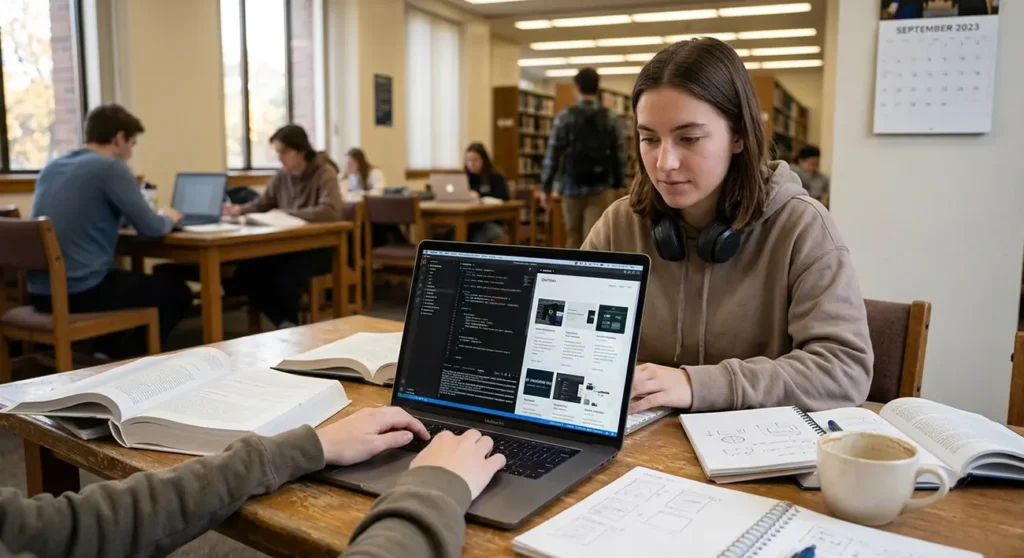
The strongest time to start is at least one semester before applications for internships or full-time roles begin, not the final weeks before graduation. Building it under pressure tends to produce a rushed site with thin project descriptions, which does more harm than having no site at all.
A more realistic timeline looks like this:
- First and second year: collect coursework, side projects, and volunteer work as raw material, even without a live site yet.
- Junior year or equivalent: publish a first version with two or three solid projects, then keep adding as new work comes in.
- Final year: refine the strongest three to five projects, remove weaker early work, and align the site with the specific roles being targeted.
A career changer returning to school for a second degree faces a similar pattern, just compressed. Someone leaving a retail management job for a data analytics program, for example, benefits from starting the portfolio the moment the first real project is finished, rather than waiting until the program ends.
What to Include on a Student Portfolio Website
A student portfolio does not need dozens of sections. A focused site with the right pieces, built well, consistently outperforms a bloated one.
- Step 1: Add a short introduction that states the field of study, the type of role being pursued, and one sentence about what makes the approach different.
- Step 2: Feature three to five projects, each with the problem, the process, the tools used, and the result.
- Step 3: Include a downloadable resume, even though the site itself carries more weight than the file.
- Step 4: Add a contact section with an email address and, where relevant, a scheduling link, so a recruiter or client can reach out without friction.
- Step 5: Link relevant social or professional profiles, but only ones kept current and professional.
Platforms such as Portfoliomo handle the layout and hosting side of this, which lets a student focus on the project write-ups instead of learning web design from scratch.
Portfolio Website vs. a Resume PDF or LinkedIn Profile Alone
A resume and a LinkedIn profile still matter, and a portfolio website does not replace either one. What it adds is depth. LinkedIn is built for quick scanning and networking; a resume is built to pass an applicant tracking system. Neither format leaves room for a full case study, a work sample, or a personal writing voice.
Freelancers feel this gap even more directly than job seekers. A freelance writer chasing a new client, for instance, sends a short pitch email, and the first thing most potential clients do is search for proof of past work. A portfolio link in that email converts far more often than a request to ‘see attached resume,’ since it takes the client seconds to judge the writing style firsthand.
For students weighing where to start, comparing website builders on the Portfoliomo pricing page is a reasonable first step, since student budgets are often the deciding factor between a free plan and a paid one.
Common Mistakes Students Make With Portfolio Websites
- Publishing unfinished or placeholder projects just to fill space, which reads as carelessness rather than volume.
- Writing project descriptions that only list tools used, without explaining the problem being solved.
- Copying a generic template without adjusting it, so the site looks identical to dozens of others in the same field.
- Leaving outdated contact information or a broken resume link, which quietly costs opportunities without ever showing up as a rejection.
- Waiting until the last month before graduation to start, then rushing the entire site in a weekend.
Pro Tip: A surprising number of student portfolios lose points not on design but on load speed, since large unoptimized images slow the site down on mobile. Recruiters frequently browse portfolios on a phone between meetings, and a slow-loading page often gets closed before the first project even appears.
Tips for the Future: Keeping a Portfolio Relevant After Graduation
A portfolio website is not a one-time project; it needs occasional upkeep the same way a resume does. Once a semester, or after finishing any major project, it is worth reviewing the site and asking whether the strongest current work is still on display.
- Swap out academic projects for professional ones as soon as real work experience is available.
- Remove projects that no longer represent current skill level, even if they took significant effort at the time.
- Update the introduction section to reflect the current career stage, since a site written for internship applications reads differently than one aimed at full-time roles.
- Keep the domain and hosting active; a portfolio link that leads to an expired page does more damage than not having one listed at all.
Anyone starting from zero can move through the basics quickly using a guide like Portfoliomo’s get-started walkthrough, which keeps the setup process short enough to finish in a single sitting.
Frequently Asked Questions
Do students really need a portfolio website before graduating?
In most fields, yes. It gives recruiters and clients concrete proof of skill instead of a list of claims, which shortens the path to an interview or a paid project.
What if a student does not have any professional work experience yet?
Coursework, personal projects, volunteer work, and class assignments all count as long as they are presented with the same care as professional work: a clear problem, process, and result.
How many projects should a student portfolio include?
Three to five strong projects generally work better than ten rushed ones. Quality of explanation matters more than volume.
Is a free website builder good enough for a student portfolio?
For most students, yes. A free or low-cost plan on a platform built for portfolios covers the essentials; upgrading to a paid plan usually only becomes necessary for a custom domain or advanced features.
Should a portfolio website replace a resume?
No. A resume is still required for most application systems, but the portfolio link should sit at the top of it, since that is usually where a hiring manager looks first for proof.
Does a portfolio website help students outside design, tech, or writing fields?
Yes. Business, marketing, education, healthcare, and finance students can all present relevant projects, reports, or case studies in the same format.
How long does it take to build a first version of a student portfolio?
A focused first version with two or three projects can realistically be finished in a weekend using a template-based builder, though writing strong project descriptions usually takes longer than the design itself.
Should a student remove a portfolio website after landing a job?
No. It should be updated instead of removed, since it keeps serving as proof of skill for future roles, freelance work, or a career change later on.
What is the biggest mistake students make with their first portfolio?
Publishing thin, unfinished, or purely decorative projects just to fill space, which tends to lower a recruiter’s impression rather than raise it.